
How To Market a Conference: A Simple 12‑Week Plan To Actually Fill The Room
How To Market a Conference: A Simple 12‑Week Plan To Actually Fill The Room
Most conferences “do marketing” by announcing dates, posting a logo a few times, and praying registrations show up.
That is not a plan. That’s wishful thinking.
If you want a full room, you need one thing: a simple, repeatable conference marketing system you can run every year. Not 17 tactics. One system.
This is that system: a 12‑week conference marketing plan built around a clear ticket ladder, real deadlines, and consistent communication.
Start With What You’re Selling (Not With Channels)
Conference marketing doesn’t start with “Should we run Facebook ads?” It starts with the offer.
Decide your full‑price General Admission ticket first. That’s the number you’d be happy if everyone paid. Then build structure around it: a short Super Early Bird window at a meaningful discount for your warmest audience, an Early Bird price that is still a good deal but worse than Super Early, and a Standard price that becomes your default as the event nears. Add one VIP tier at roughly 1.5–2 times GA with obvious extra value: better seating, a VIP Q&A or breakfast, recordings included, maybe an extra CEU workshop.
Now your marketing has real reasons to act early. You’re not shouting “Register now” into the void; you’re pointing to real price changes, real bonuses, and real scarcity.
Turn The Last 12 Weeks Into a Campaign, Not Chaos
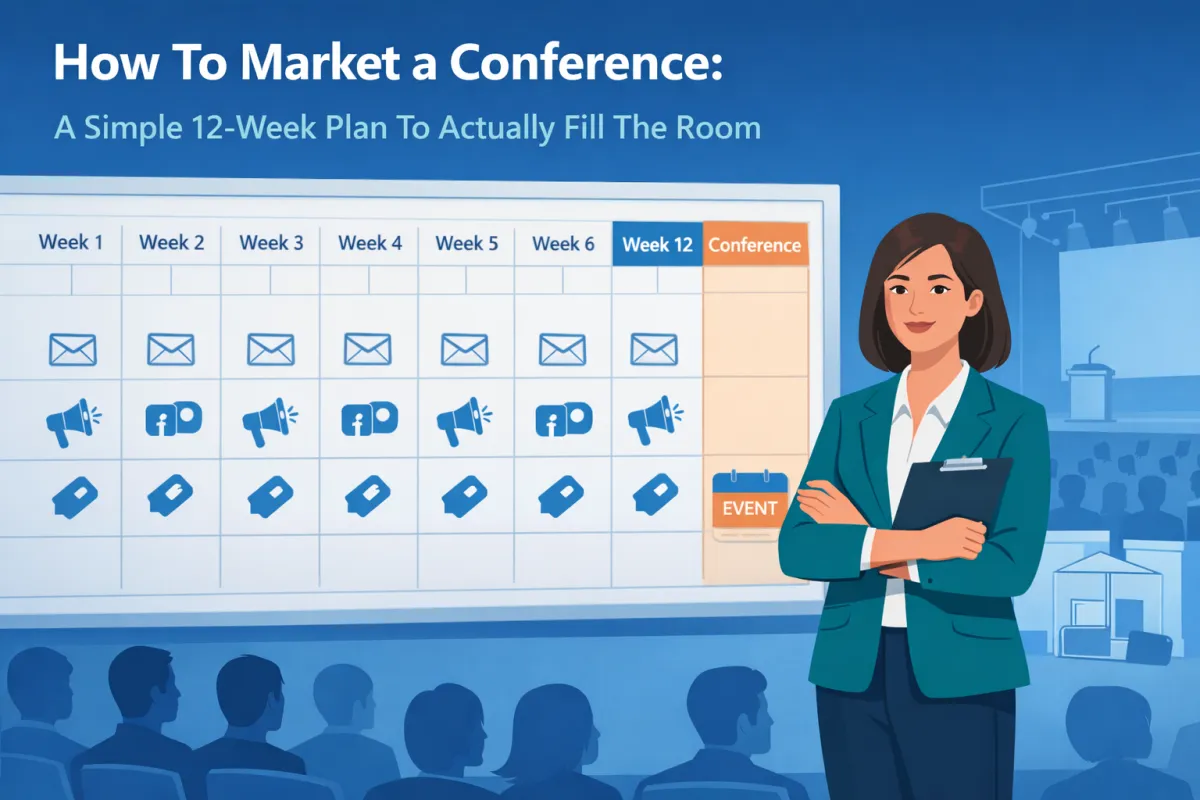
Think of the twelve weeks before your conference as four phases, each with a clear job.
In the launch phase, roughly weeks twelve to ten, you announce the event and open your strongest deal. The goal is to convert past attendees, members, and your warmest list into Super Early Bird buyers. Your email and social content here is simple: who the event is for, the outcome they’ll get, the dates and city, and the best price you will offer all year, with a hard end date. This isn’t about cute copy. It’s about clarity and urgency.
In the Early Bird phase, weeks ten to six, you shift from “we exist” to “here’s what you get.” You introduce key speakers, reveal themes, and share stories or clips from previous years. Email becomes your backbone: one or two useful updates per week that teach something, highlight a session, or answer a common question, and then quietly remind people when Early Bird ends. Paid ads and social amplify the same messages instead of inventing new ones.
In the objection‑killing phase, weeks six to two, you focus on all the reasons someone hasn’t registered yet. You publish the agenda. You explain how to justify the trip to a boss. You spell out CEU details. You share case studies from past attendees. The marketing here is less hype and more “make it easy to say yes.”
In the final two weeks, you’re in last‑chance mode. Prices are what they are. You stop pretending people don’t know about the event and simply remind them that registration closes on a specific date, that seats or hotel blocks are almost gone, and that this is their last chance to join.
Let Email Do The Heavy Lifting
If you had to choose one channel to market a conference, it would be email.
From launch to close, you build a simple email sequence mapped to the phases above: launch announcements, value‑driven content about speakers and sessions, practical logistics that reduce friction, and short, clear deadline reminders whenever a price change hits. You pre‑write as much of this as possible so you’re executing during the 12‑week window, not inventing.
You also treat buyers differently from prospects. After someone registers, send a short post‑purchase sequence that makes them feel smart for buying and offers logical upgrades: VIP, workshops, or recordings. At the same time, anyone who clicks through but doesn’t purchase can get a gentle nudge or a “lighter” option like virtual‑only if that fits your model.
Use Social and Ads To Echo, Not Replace, The Plan
Social media and paid ads are there to amplify a working system, not rescue a broken one.
On social, you show the same story from different angles: clips or quotes from last year’s sessions, quick interviews with speakers, behind‑the‑scenes planning, and frequent reminders of upcoming deadlines. The goal isn’t to go viral; it’s to stay visible and constantly point back to registration.
Paid ads are simplest when they mirror your email: an ad that explains the core promise of the conference, ads that share proof from past attendees, and short deadline creatives any time a price change or registration close is coming. Early on, you spend more on warm audiences and light testing; closer in, you shift more budget to retargeting people who visited your page but didn’t buy.
Turn Speakers and Sponsors Into Marketing Channels
Your best conference marketing assets are often not on your payroll.
Each speaker and sponsor already has an audience of the exact people you want. Build that into your agreements: ask for a couple of emails and a few social posts in the 12‑week window, and make it easy by handing them done‑for‑you copy, graphics with their face or logo, and their own tracking link.
Now your “how to market a conference” plan isn’t just what you do. It’s what your entire ecosystem does with you.
The Difference Between “Announce and Pray” and a Real Plan
The conferences that sell out don’t have magic channels. They have discipline.
They pick a clear offer, run one simple 12‑week marketing calendar around real deadlines, let email do the heavy lifting, and use social, ads, speakers, and sponsors to echo the same message until it’s boring.
If you want that mapped out room by room and week by week, that’s exactly what we built the Flawless Conference Playbook for: turn “we hope people register” into a repeatable system you can run every year.
