
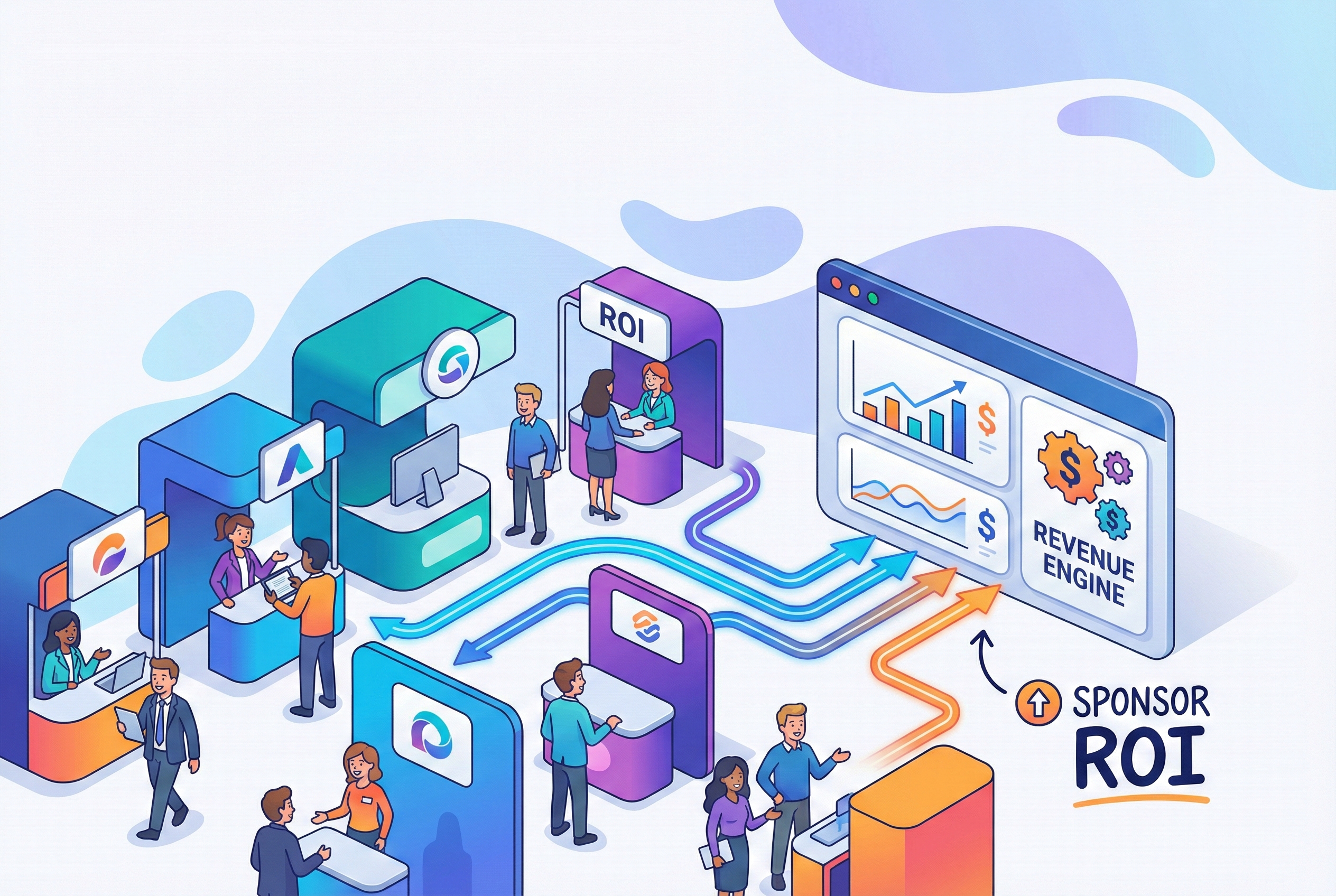
Sponsors Are Not Decorations: Turning Your Expo Into a Revenue Engine That Renews Every Year
Most conferences treat sponsors like furniture.
You sell a “Gold / Silver / Bronze” package, drop them in the back of a ballroom, print their logo in the program, and hope they’re happy enough not to send an angry email afterward. Then renewal season hits and half of them “don’t see the ROI.”
That’s not a sponsor problem. That’s a design problem.
Sponsors are not ornaments. They’re customers with a P&L and a boss asking one simple question: “What did we actually get for this money?” If you can’t answer that concretely, they won’t be back.
This is how you fix that, using the same event you already run.
(See Figure 1: What Sponsors Are Really Buying.)

Know What Sponsors Are Really Buying
Good sponsors aren’t paying for vibes. They’re paying for four things, whether you acknowledge it or not: access, attention, authority, and assets.
Access means being in front of the right people with the right roles and budgets, in one place. Attention means those people actually see, talk to, and remember them, not just walk past a lonely table on the way to coffee. Authority is the credibility they borrow from your brand and stage when they say, “We’re a partner of this conference.” Assets are what they take home: leads, meetings, content, and data they can plug into their own sales motion.
If your prospectus doesn’t speak to at least one of those in every major benefit you list, it’s mostly fluff.
Build Packages Around Outcomes, Not Logo Soup
The lazy way to package sponsors is stacked logos: slightly bigger fonts and a slightly larger table as you go up the tiers. The grown‑up way is to start with a picture of a home‑run outcome for a top sponsor at your event and then price from there.
(See Figure 2: Outcome‑Based Sponsor Tier Ladder.)

For a top tier, that might mean a prime booth position on the main traffic path, a guaranteed session or hosted roundtable with your attendees, their brand on something everyone touches (Wi‑Fi, app, coffee stations), and a post‑event report that spells out how many people they reached and how. From there you scale down access and prominence as price falls: mid‑tier might keep strong placement and solid engagement tools, while entry level gets a straightforward expo presence and inclusion in any traffic‑driving mechanics you run, like passport games or scan‑to‑win promos.
You can keep the familiar Platinum/Gold/Silver labels if you want. Just make sure the real ladder is built on increasing access, attention, authority, and assets, not just bigger logos.
Design the Floor So Sponsors Actually Get Traffic
Even the best package on paper fails if you bury sponsors in the wrong place.
Layout is marketing. If the expo is in a basement, coffee is in another wing, and doors to the main ballroom bypass sponsor space entirely, you’ve silently told sponsors they’re an afterthought.
Flip that. Place registration, coffee, and snack stations inside or directly adjacent to sponsor areas so people naturally pass through. Put high‑demand sessions near expo entrances so flows cross right in front of booths. Use wide aisles that let people stop and talk without clogging everything. Then layer in a simple, optional “game” like a passport card or digital scavenger hunt that rewards attendees for visiting multiple booths.
(See Figure 3: Bad vs Better Expo Layout for Sponsor Traffic.)

When you do this well, attendees experience it as fun and serendipity; sponsors experience it as steady foot traffic.
Treat Sponsors Like VIPs, Not Vendors
On paper, sponsors are line items. In person, they’re humans keeping score.
From the moment they sign, assign each one a single Sponsor Success Lead on your side. That person walks them through logistics, deadlines, booth decisions, and any speaking or activation opportunities. When they arrive on site, don’t just point them at general registration. Run a sponsor‑only check‑in with a clear map, their booth number, setup and tear‑down windows, Wi‑Fi and lead‑capture instructions, and a couple of key “don’t miss” moments circled for them.
On day one, physically walk the expo before doors open and fix anything that will annoy them: missing power, awkward signage, blocked views, dead scanners. Most events never do this. Just being organized, visible, and responsive puts you in the top tier of their year.
Make Lead Gen and Reporting Concrete
The number one question their leadership will ask after your event is, “What did we get?” If your answer is, “Logo exposure and good conversations,” you’ve made renewal hard.
Bake measurement into your sponsor experience. Use badge scanning at booths and sponsored sessions. Track app engagement and opt‑ins where attendees can explicitly raise their hands to be contacted. Then, after the event, send a short, honest report: how many unique attendees they scanned, who they were in broad strokes (roles, organizations), how many touched their session or offer, and how and when you delivered their brand.
(See Figure 4: Sponsor Experience Lifecycle – Before, During, After.)

You’re not inflating numbers; you’re making value visible. That single PDF is often the difference between “maybe next year” and “we’ve already budgeted for this again.”
Build a Sponsor Machine, Not One‑Off Deals
Finally, stop treating sponsor sales like one‑time begging and start treating it like a pipeline.
Make a target list: past sponsors who should renew, vendors your attendees already buy from, and exhibitors you see at similar conferences in your niche. Arm yourself with a one‑page overview that explains who attends your event, how many people, what they care about, and the type of results sponsors have seen historically. Reach out, follow up, close, deliver, report, and renew. Then repeat.
You don’t need a hundred sponsors. You need a core group of aligned partners who view your conference as a reliable growth channel. Design it that way on purpose, and sponsors stop being decorations and start becoming one of the main engines that makes your event sustainable year after year.
